Planning security for a wedding or large function
An event has one shift and no second chance. Everything depends on the venue walk-through and the briefing that happen before the first guest arrives.
Written by Surat Security Group
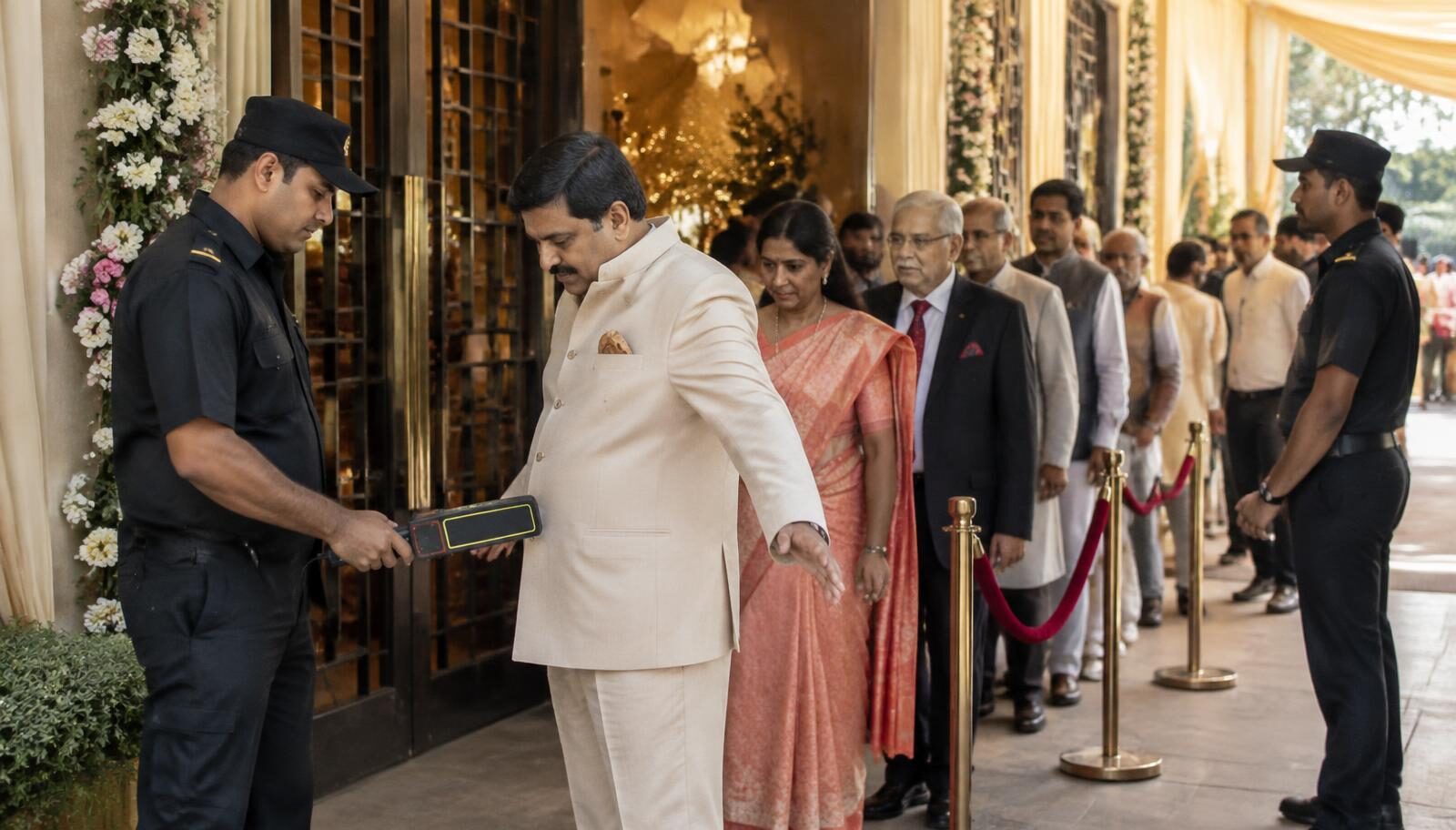
Plan for the arrival hour, not the average
Weddings and large functions fail at two moments: the peak arrival rush and the departure. Both are crowd-flow problems, and both are solved on paper days earlier.
The venue walk-through
Visit the venue with the event manager and the security supervisor together, and fix:
- Guest entry point and the queue layout at peak arrival
- Separate service route for caterers, decorators and vendors
- Parking approach, drop-off point and marshalling plan
- Gift and valuables area, and who is posted there for the whole event
- Family and VIP rooms, and who may enter
- Emergency exits and the route to keep clear at all times
Decide the entry rule early
Invitation check, guest list, passes, or open entry with screening — each implies a different queue and a different number of people at the gate. Deciding this on the day guarantees a crowd at the entrance.
Zone and time-wise deployment
Posts should be assigned by area and by phase: arrival, main function, dining, departure. A chart that says "8 guards" tells nobody anything. A chart that says which post is manned at 8:45pm during dining is usable.
Cover the areas guests do not see
Gift counters, cash handling, jewellery and personal belongings in changing rooms, vendor storage and generator and equipment areas all need specific cover. This is where losses at family functions concentrate.
Brief on tone as well as procedure
At a family event, security should be firm at the gate and nearly invisible inside. Personnel should be briefed on how to speak to elderly guests, how to handle an insistent visitor without a scene, and when to fetch a supervisor instead of arguing.
Plan the departure
Departure is where crowd control is usually forgotten: everyone leaves at once, vehicles are called simultaneously, and the parking approach jams. Assign marshals for departure specifically.
Two weeks before, confirm
- Final guest count and arrival window
- Entry rule and who holds the guest list
- Deployment chart by zone and phase
- Named supervisor per zone and one overall contact
- Coordination call with venue and caterer
- Emergency exit routes confirmed clear
To arrange a venue walk-through for your function, call +91 9958684077 with the date, venue and expected guest count.