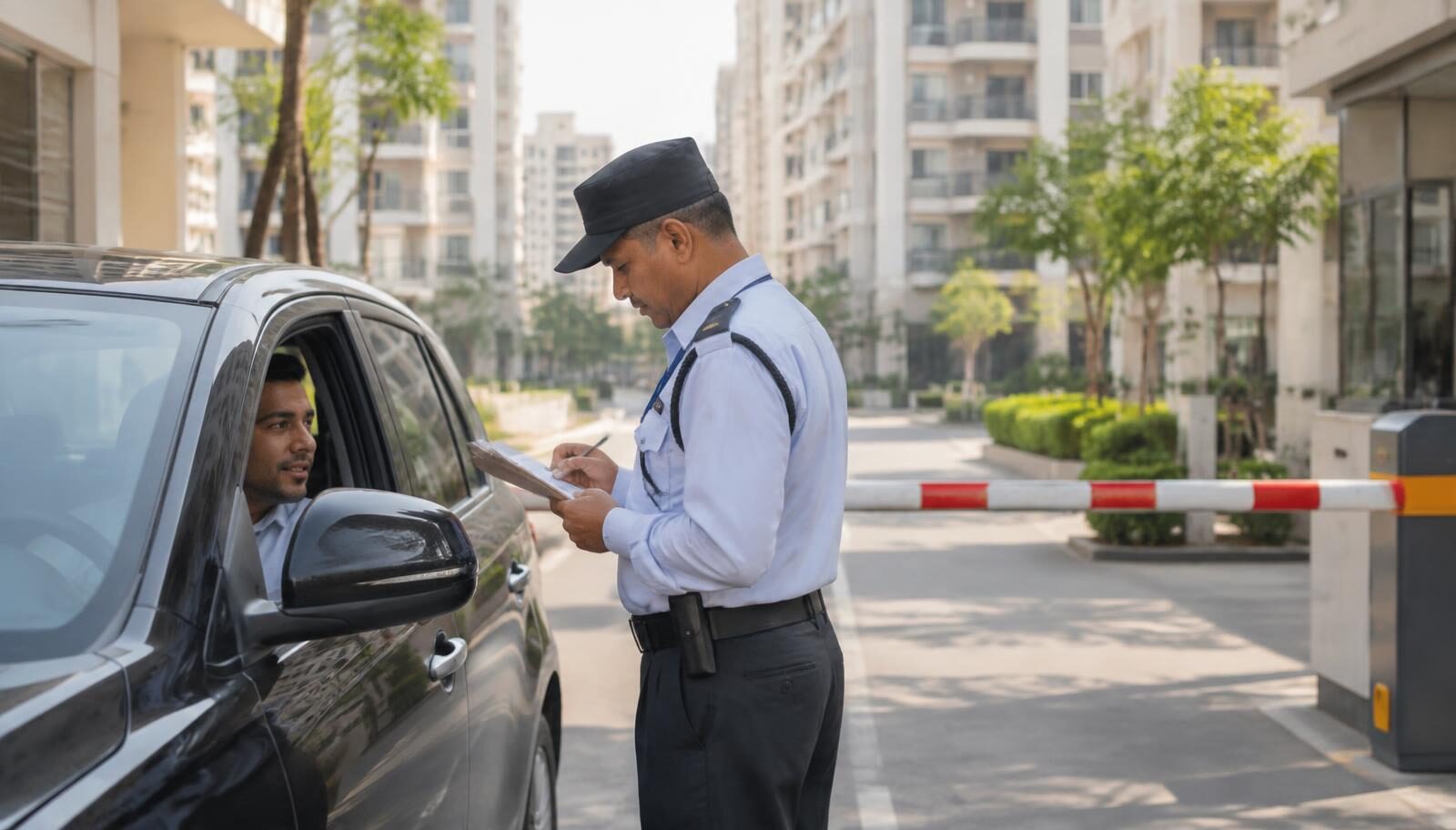
How to assess the security needs of your premises before hiring guards
Most security contracts are sized by guesswork. A structured walk of your own premises will tell you how many posts you actually need — and where a guard would achieve nothing.
Written by Surat Security Group

Start with exposure, not headcount
The usual way a security requirement is decided is unfortunately backwards: somebody proposes a number of guards, and posts are invented to fill it. Work the other way. Identify where your premises is exposed, decide what must happen at each of those points, and only then count the people needed.
Walk your own site like an outsider
Do this once, slowly, with a notebook.
- Entry and exit points. Count every one, including service gates, basement ramps, terrace access and the gate that is "always locked". Each open point either needs cover or needs closing.
- Peak movement hours. Note when arrivals, deliveries and dispatches concentrate. Cover is judged at peak, not average.
- Blind spots. Corners, stairwells, parking levels and back boundaries that nobody overlooks and no camera sees.
- What is worth taking. Cash, stock, tools, laptops, copper, scrap, personal belongings. Note where each sits and who has access.
- Where records are made. Visitors, deliveries, material out, contractors in. If a movement is not written down anywhere, it is not controlled.
Ask what has already gone wrong
Past incidents are the most honest risk assessment you will get. A missing delivery, a dented car in the basement, an unfamiliar person on a floor, a fire exit found chained — each one points to a specific post and a specific instruction.
Decide the instruction before the post
A post without an instruction is decoration. For each point you plan to staff, write down: who is checked, what is recorded, what is refused, and what is escalated immediately and to whom. If you cannot write those four lines for a post, you do not yet need the post.
Do not forget the hours nobody watches
Night shifts, Sunday mornings, holiday weeks and the period between the last dispatch and the gate closing are when most sites are exposed. Cover for these hours should be planned deliberately and supervised, because an unchecked night post drifts quickly.
Then ask a provider to challenge your plan
Bring your notes to the site assessment. A provider worth hiring will disagree with part of your plan, and the disagreement is where the value is. Be suspicious of anyone who quotes without walking the site.
A short checklist
- Every entry point listed and either staffed or closed
- Peak hours identified per gate
- Blind spots listed for patrol or camera cover
- Registers defined for visitors, material and contractors
- Written instruction and escalation route for every post
- Night and holiday cover planned, not assumed
- Named supervisor and a single escalation contact
Want a second opinion on your own assessment? Call +91 9958684077 and we will walk the site with you.